| Seaboard Air Line
A Pioneering Spirit |
|
|---|---|
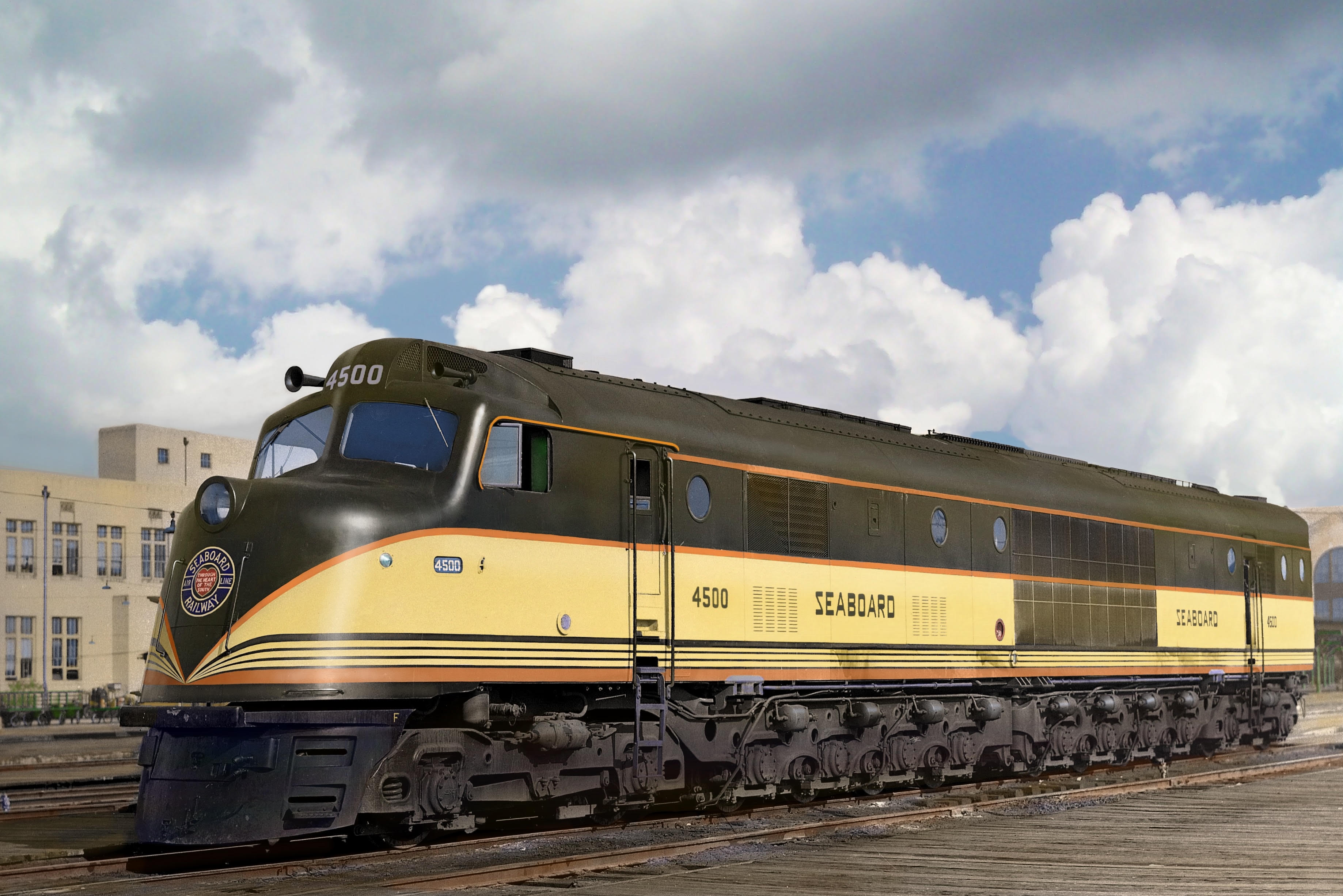
| New: 1 November 2026 | Ernst Sevde photo at Jacksonville, Fl on 6 January 1946 (Warren Calloway collection) |
| Reporting mark: SAL | Formatting by: R. Craig |
When it came to early diesel power, the Seaboard Air Line was adventuresome. Aside from the
Pennsylvania RR, few domestic railroads employed more Baldwin-built cab units than Seaboard;
two quick examples come to mine -- the 12-axle "Centipede" and the rare "baby-face" passenger
that once wore the railroad's classsy citrus colors. The railroad was also one of the earliest
to adopt EMD's sleek-nose E-units to power its streamlined passenger trains. Additionally,
it's worth noting that SAL was also the first railroad to purchase EMD's steam-generator
equipped dual-purpose, high horse-power road-switchers, the SDP35. Moreover,the Seaboard was
the only railroad east of Chicago to employee the early versions of Alco's six-axle RSC2/RSC3
road-switchers, and they did so in substantial numbers.
However, it all ended much to early for many fans. At the stroke of midnight on 1 July 1967, the Seaboard Air Line became one more casualty in railroading's war of attrition. The 4100-mile SAL and long-time rival Atlantic Coast Line elected to merge, believing the marriage provided the greatest opportunity for survival. The result was the 9800-mile Seaboard Coast Line. The Seaboard Air Line clearly possessed a pioneering spirit during the early days of dieseldom, and that agressiveness helped the railroad build strong freight and passenger volumes, not to mention achieving profitability more oftren than not. |
|
| Part One -- Passenger & Freight Cabs | |
|---|---|
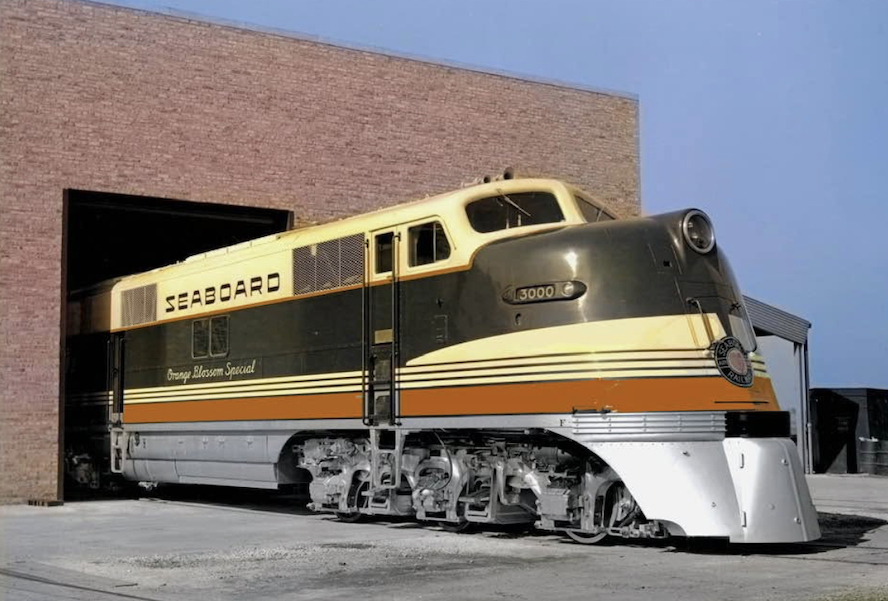  | |
EMD E4A #3000 - EMD's early streamlined passenger locomotives (E3 thru E6 moels) featured a
slanted nose which portrayed sleekness and speed. Delivered in October 1938, SAL's E4A units
coincidently pre-dated the builder's E3A model by a mere couple of days. This image of E4A
#300O was probably one of the initial publicity photos. (Warren Calloway collection) |
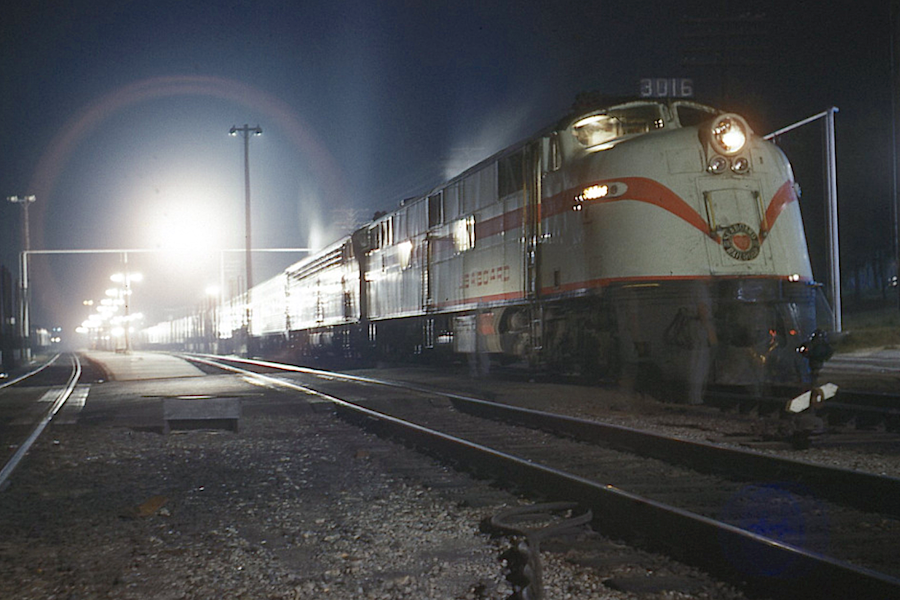
EMD E6A #3016 - Generally speaking photos of SAL's E6s are difficult to find; their scarcity
is because SAL only owned three of the slant nose beauties (#3014-3016). General Motors had
exhibited the #3014 at the 1940 Worlds' Fair; the other two were built late in 1941. This
image places #3016 at the Raleigh station in October 1960. (Wiley Bryan photo / Joe Seffner
collection) |
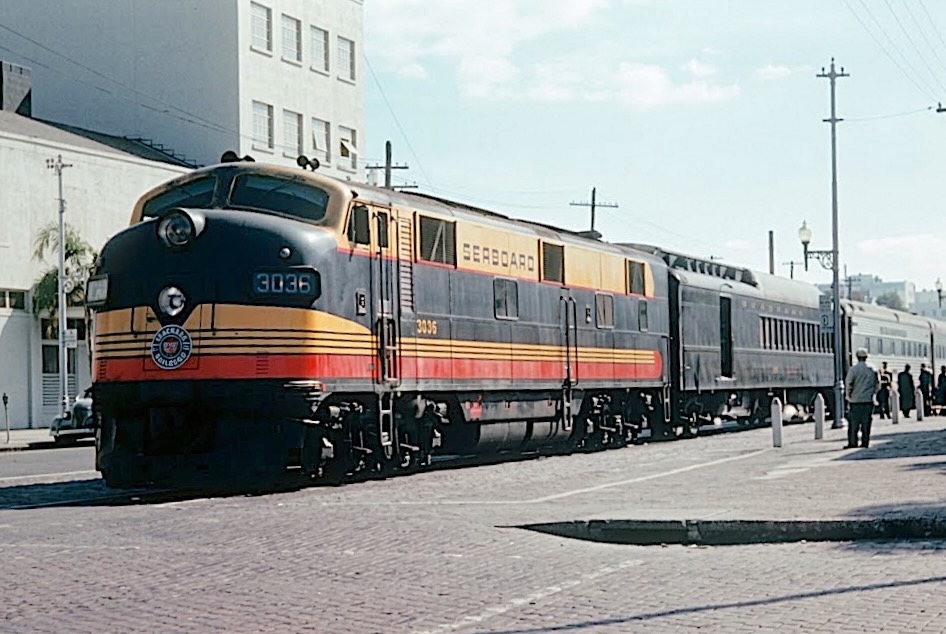  | |
EMD E7A #3036 - Sans a silver pilot and undercarriage, the E-unit's citrus paint scheme loseses
some of its visual impact. The above St. Petersburg, Florida scene is from a duplicate slide that
had showed considerable colorshift. With the help of "GIMP - Graphic Image Manipulation Program,"
the photo was substantially restored. The slide bore no photographer's name. (R. Craig collection) |
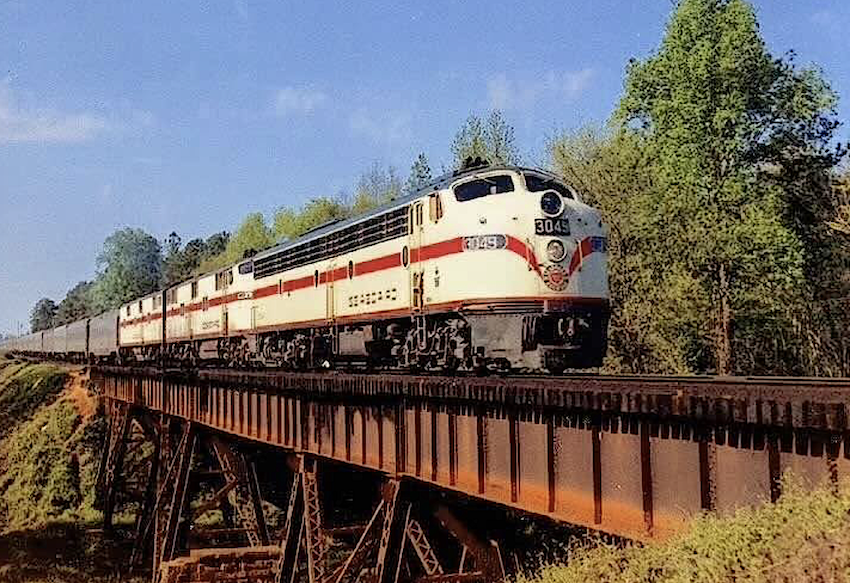
EMD E8A #3049 - For nearly a dozen years, SAL's eleven E8A's could be seen on the point of
the railroad's crack passenger trains "Silver Meteor," "Silver Star," "Silver Comet" and
briefly on the "Orange Blossom Special" which was discontinued in 1953. The #3049 seen here
has the "Silver Star" north of Raleigh, NC. (Wiley Bryan photo / Warren Calloway photo collection)
|
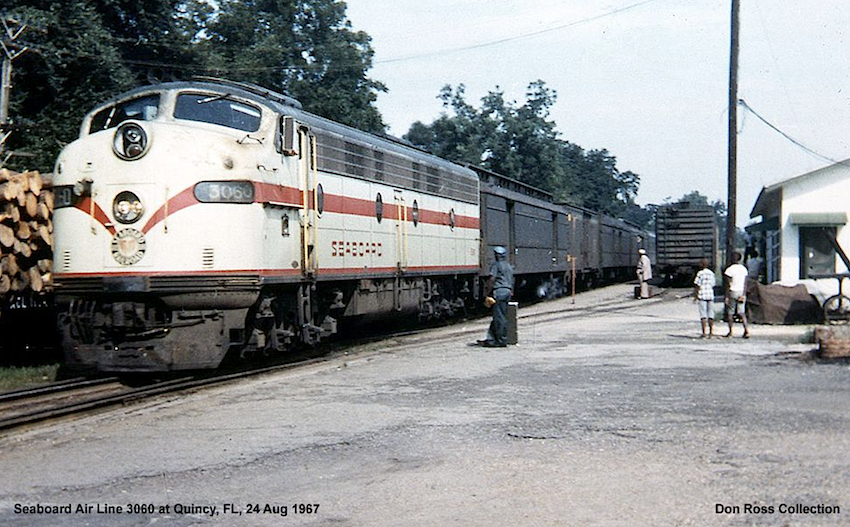  | |
E9A #3060 -- In December 1963, EMD shipped SAL #3060 the second from last E-unit ever built.
The 2400-hp loco was somewhat notable because it was constructed from a wrecked E6 unit, and
it featured the front-end pilot of a freight-type F-unit. Additionally, it was the only SAL
E-unit not to ever wear the railroad's citrus colors. (Don Ross collection) |
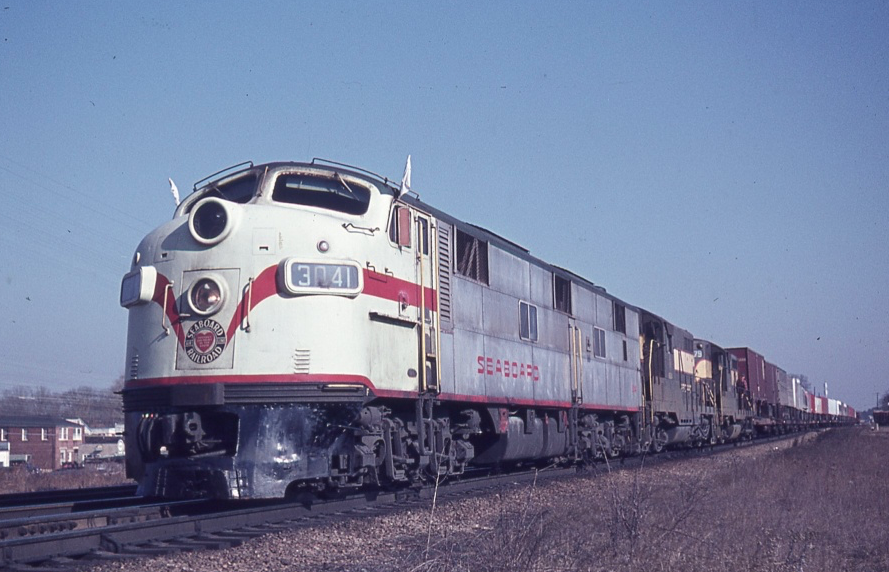
E7A #3041 (photo left)-- Seaboard Air Line was one of the railroads to adopt early the practice
of EMD E-units on the point of freight manifests. This January 1963 shot of SAL E7A #3041 leading
an inter-modal train at S. Norlina, North Carolina is just such an example. (Wiley Bryan photo /
Joe Seffner collection. |
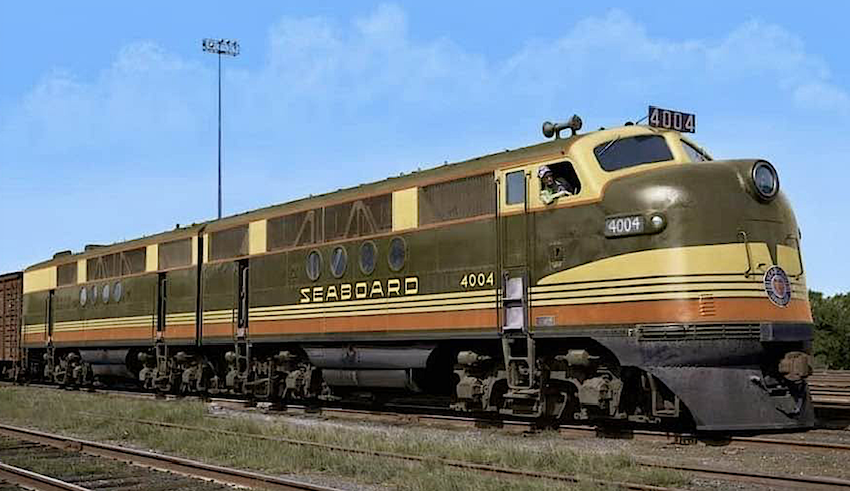  | |
EMD FTA #4004 -- SAL's initial order for EMD freight cabs consisted of six semi-permanently
coupled FTA/B sets in 1942; they wore a modified version of the railroad's citrus colors. An
additional 16 FT sets arrived during the next two years. The FTA #4004 and FTB #4104 were
caught on film at Raleigh Yard in September 1946. (Wiley Bryan photo, Warren Calloway collection). |
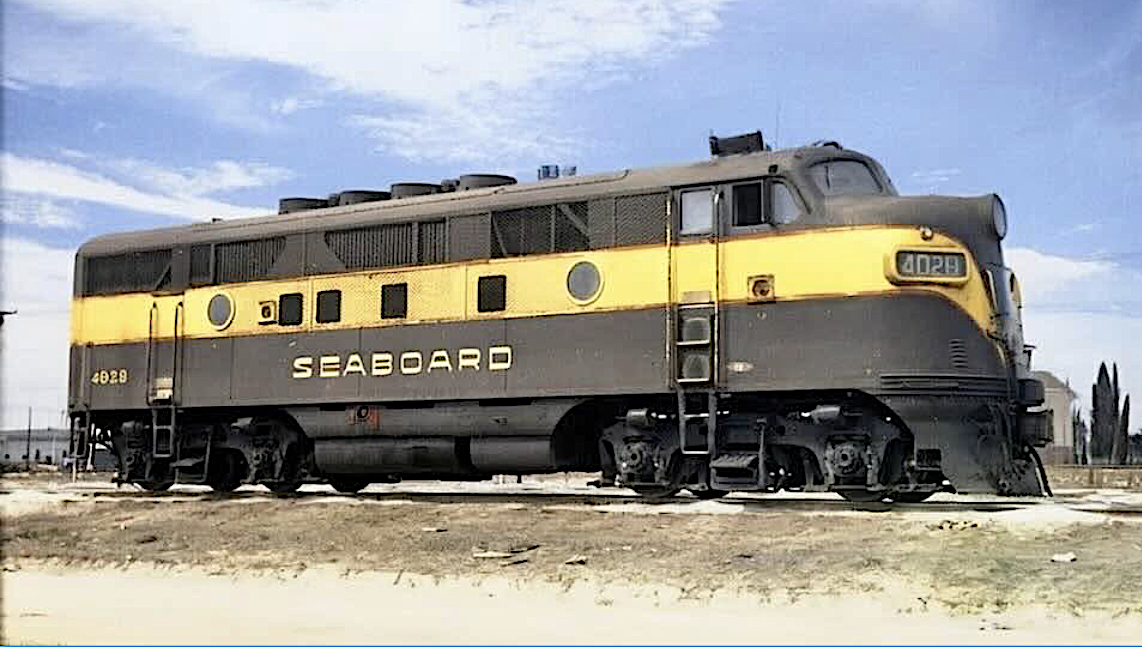
EMD F3A #4028-- During March of 1948, Seaboard management added eleven F3As to the roster.
Beyond increasing the horsepower capacity of its F-unit stable, the new freight cabs brought
a much needed flexibility to their semi-permanently coupled FT cousins. Standing idle, the
#4028 was photographed at Hamlet, North Carolina on 21 February 1965 (Warren Calloway photo). |
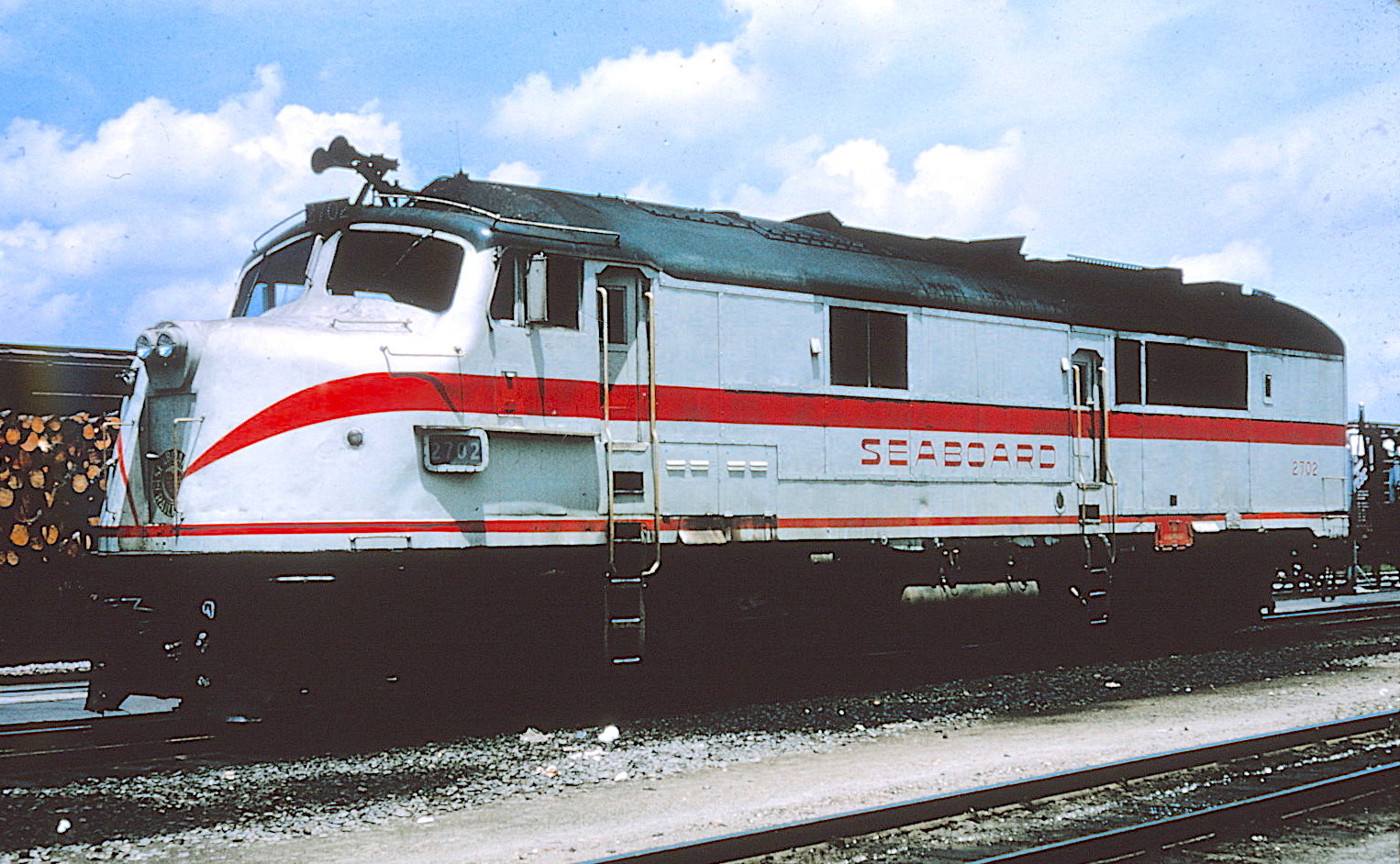  | |
BLW DR 64-1500 #2702 - The BLW "Baby-faced" trio were primarily assigned to secondary passenger
service. Beyond the loss of the citrus color scheme by the time of this 15 August 1964 photograph,
the three Baldwins had undergone other less discernable modifications, including installation of
a headlight cluster and a recessed access door in the nose. (Ken Ardinger photo / R. Craig
collection) |
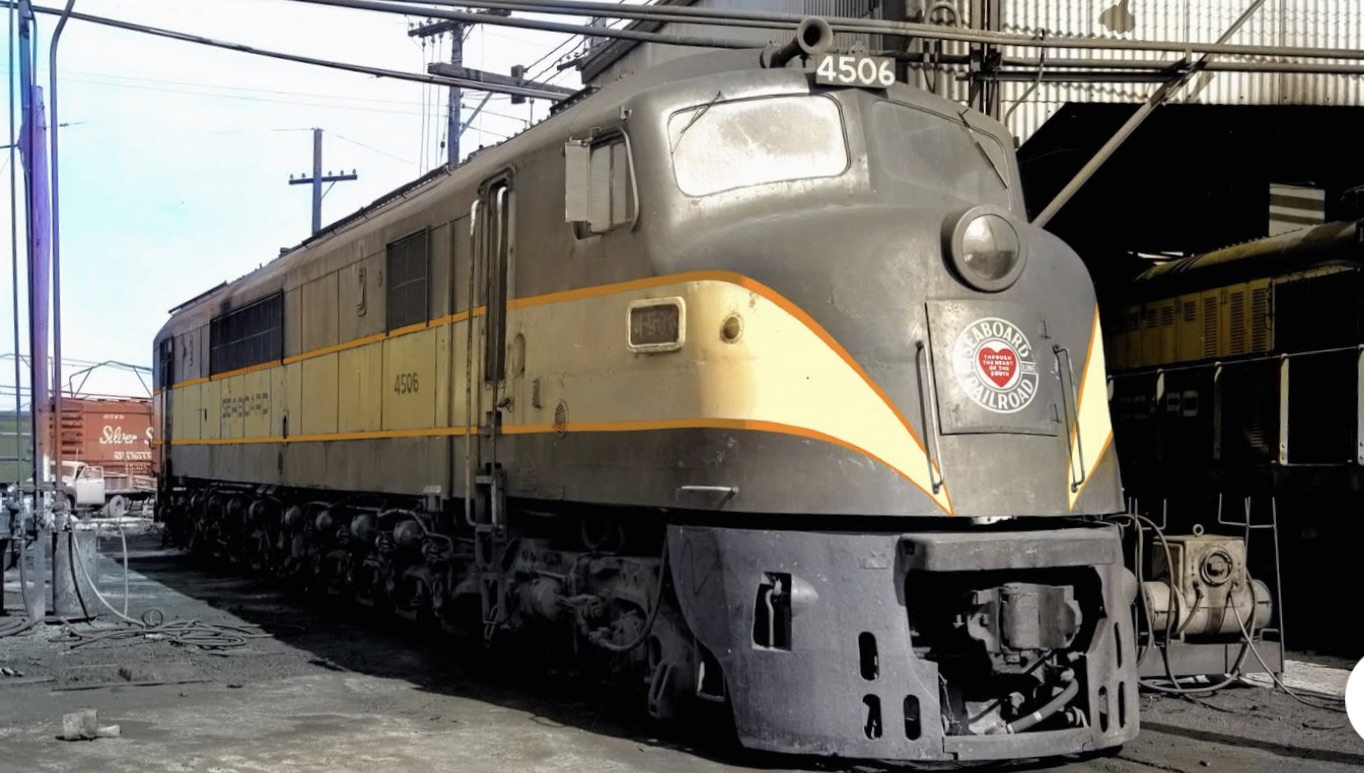
BLW DR 12-8-1500/2 #4506 -- SAL Centipedes #4501-4513 arrived a full 16 months after #4500
(top photo) which gave builder Baldwin time to make a number of design changes. Most
notable was the rework of the air in-take above the operator cab, along with removal of low
air-intake grilles adjacent engine compartment. (Felix Brunot photo / Warren Calloway collection
at Jacksonville, Florida) |
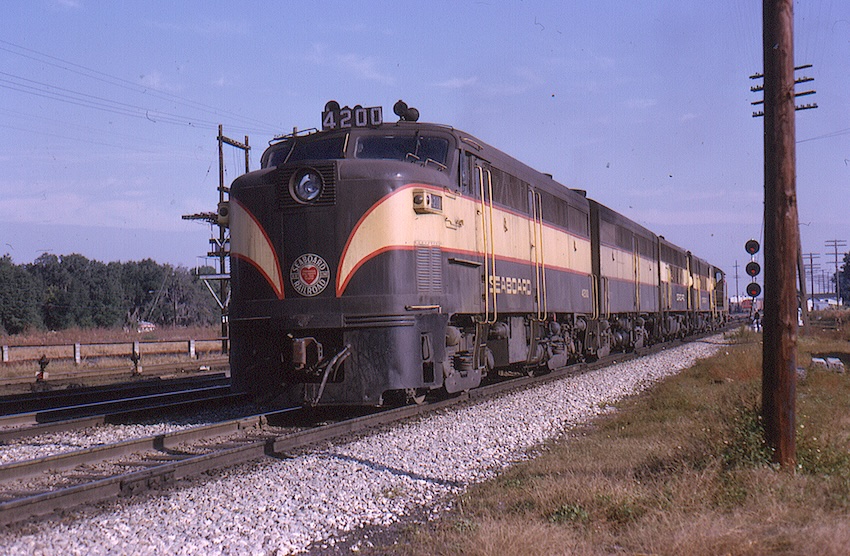
Alco FA1 #4200 -- In mid-1948, the Schenectady-builder delivered six new FA/B-1s to the
Seaboard; those Alco units were the last freight cabs the railroad bought from any locomotive
builder. This 20 November 1965 scene shows the class unit waiting for a signal at Wildwood
Yard. The photo also depicts the extra nose louvers applied by the railroad to increase airflow
to the Alco's front traction motor. (Keith Ardinger photo / R. Craig collection). | |
|
Here is a link to the Seaboard Air Line roster. |
|
|
This profile would not have been possible without the assistance of Warren L. Calloway.
Sources:
|
|
| 1 November 2026 | |