Whatever Happened to Australia's Alcos |
|
|---|---|
A sizable share of American Locomotive Company's (Alco) business was diesel exports from 1950
until 1970. In fact, there were periods where exports helped sustain the company while domestic
locomotive sales were depressed. Fortunately, the demand for Alco-designed six-axle locomotives
both freight and passenger, was especially strong in Australia; a majority of which where built
by A.E. Goodwin under license from Alco. This particular discussion however focuses solely on those
diesel locomotives that were actually built and shipped from either the company's Schenectady, NY or
Montreal, Quebec manufacturing plants. (Alco models that bore a Goodwin or Commonwealth Engineering
builder plate will be covered in a future segment.)
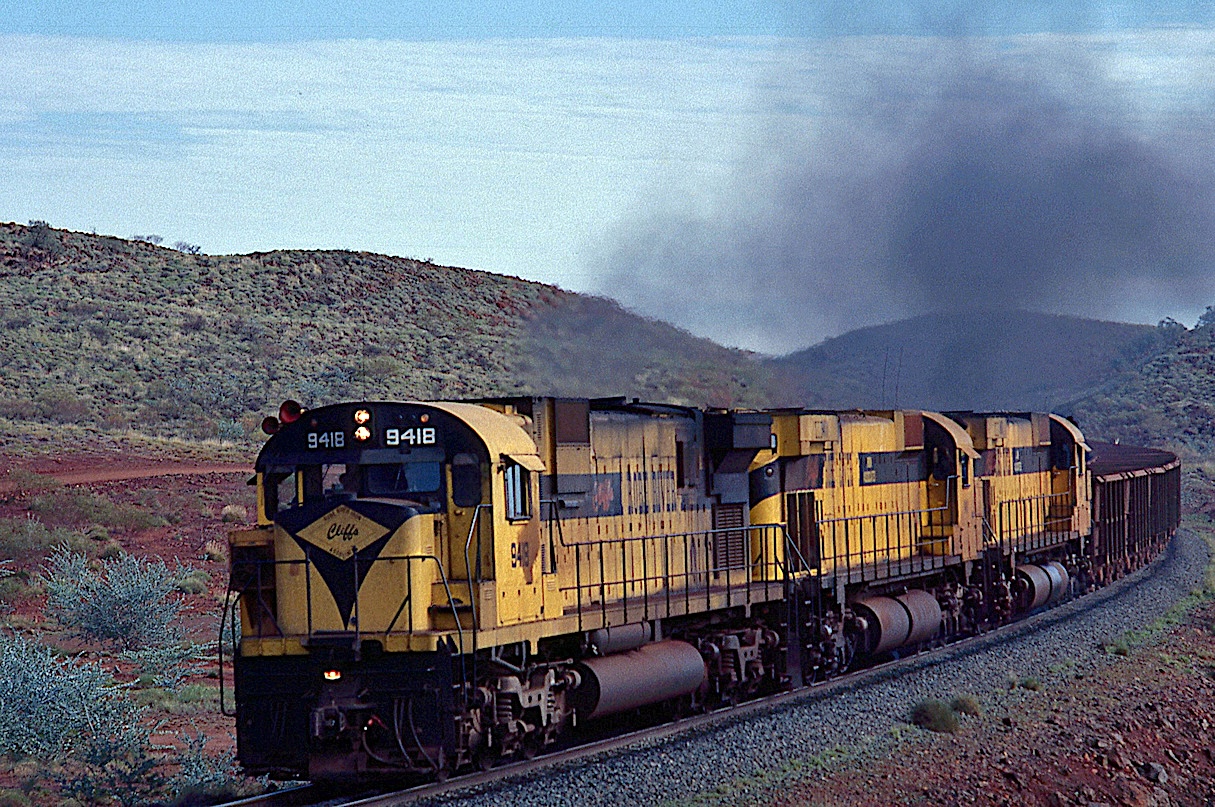 Cliffs Robe River #9418 (ex-C&O #2101) leads a loaded ore train. (Phil Melling photo, May 1978) | |
First Generation:
A strong American ally during World War II, the Australian Government unlike many other nations
found no reason to enlist the aid of U.S. built mainline diesel locomotives to haul war-time tonnage.
Aussie steam power had been very capable and remained a part of the Australian landscape until
1971. The one minor exception were four small GE-built 44-Ton industrial switchers used at the
the Sydney Government's munitions plant. (Read more here)
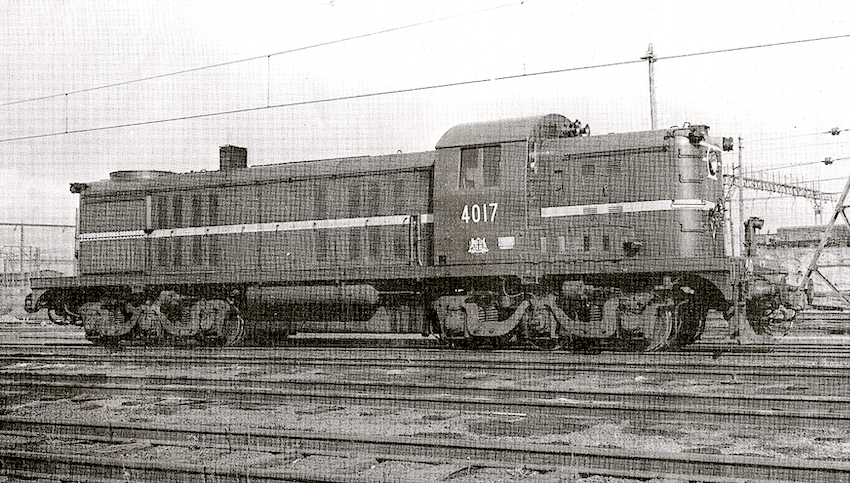
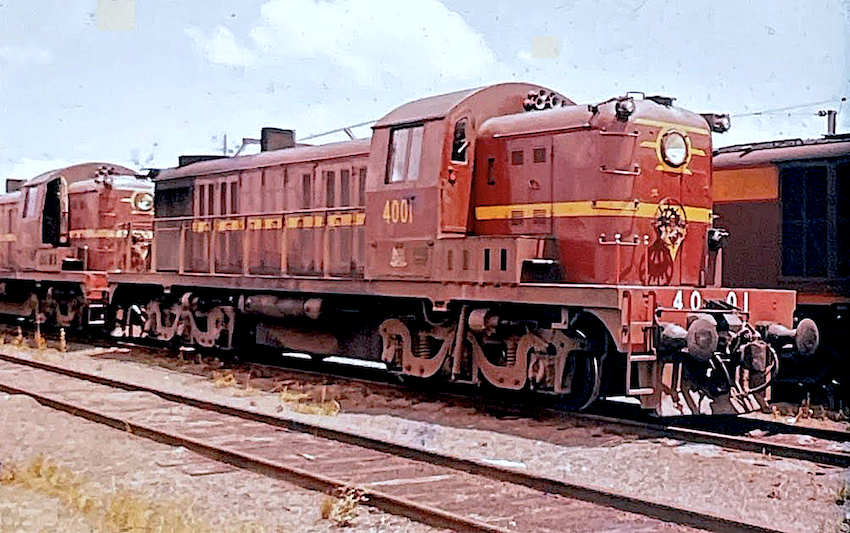
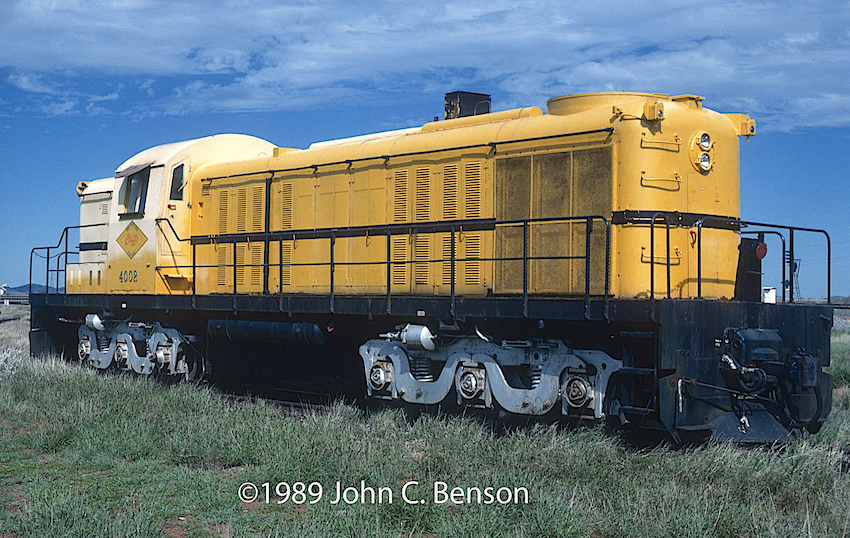
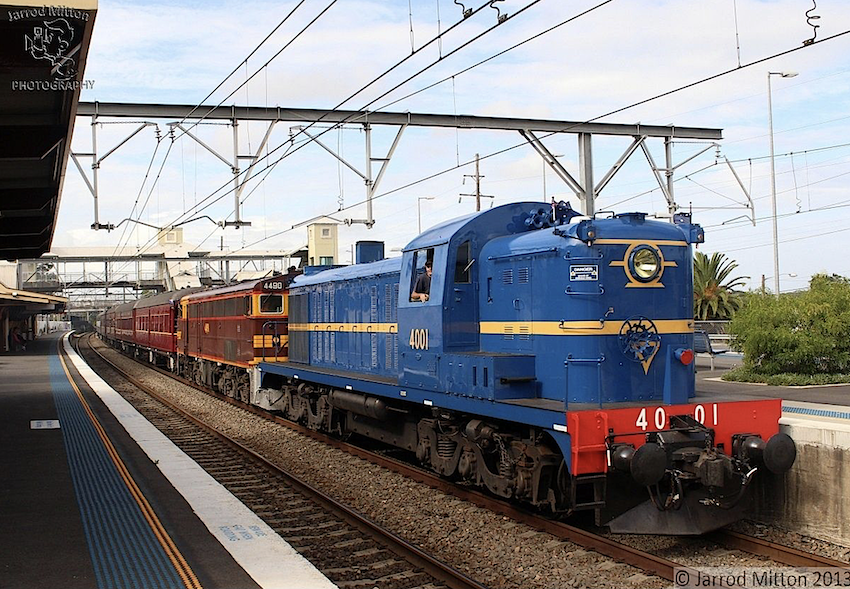
The Aussie railroad landscape began to change in late 1951 with the arrival of twenty new Alco-designed RSC3s from the company's subsidiary Montreal locomotive Works. Purchased by the New South Wales Government Railways (NSWGR), the 20 MLWs featured a 1600-horsepower V12-244 powerplant and rode atop of two 3-axle trucks (A-1-A) for better weight distribution. They also featured a cab with sloped sides to further reduce locomotives's wight. Used in both freight and passenger service, the Montreal-built newcomers wore road numbers 4001-4020. The Class 40s had the distinction of being "the first diesel road locomotives on the continent." By 1970, all but three of the Class 40 RSC3s had gone to Australian locomotive builder Goninan & Co. as trade-in on new #44200 series DL500Gs. While the #4001 was set aside for preservation in 1971, NSWGR sold RSC3s #4002 and 4006 to Robe River Iron where they became #9405 and 9401 respectively (While on Cliffs Robe River the center axles were removed temporarily). After retirement in 1979, the #9401 later moved to the Pilbara Railway History Society at Seven Mile Depot where it regained its original #4002. As for the #9405, it went to Wickham, WA as a static exhibit. |
|
 |  |
 |  |
|
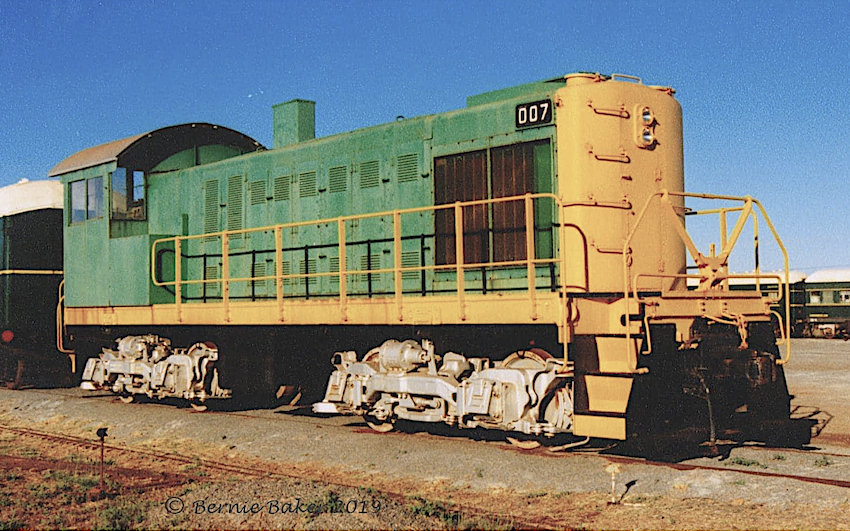
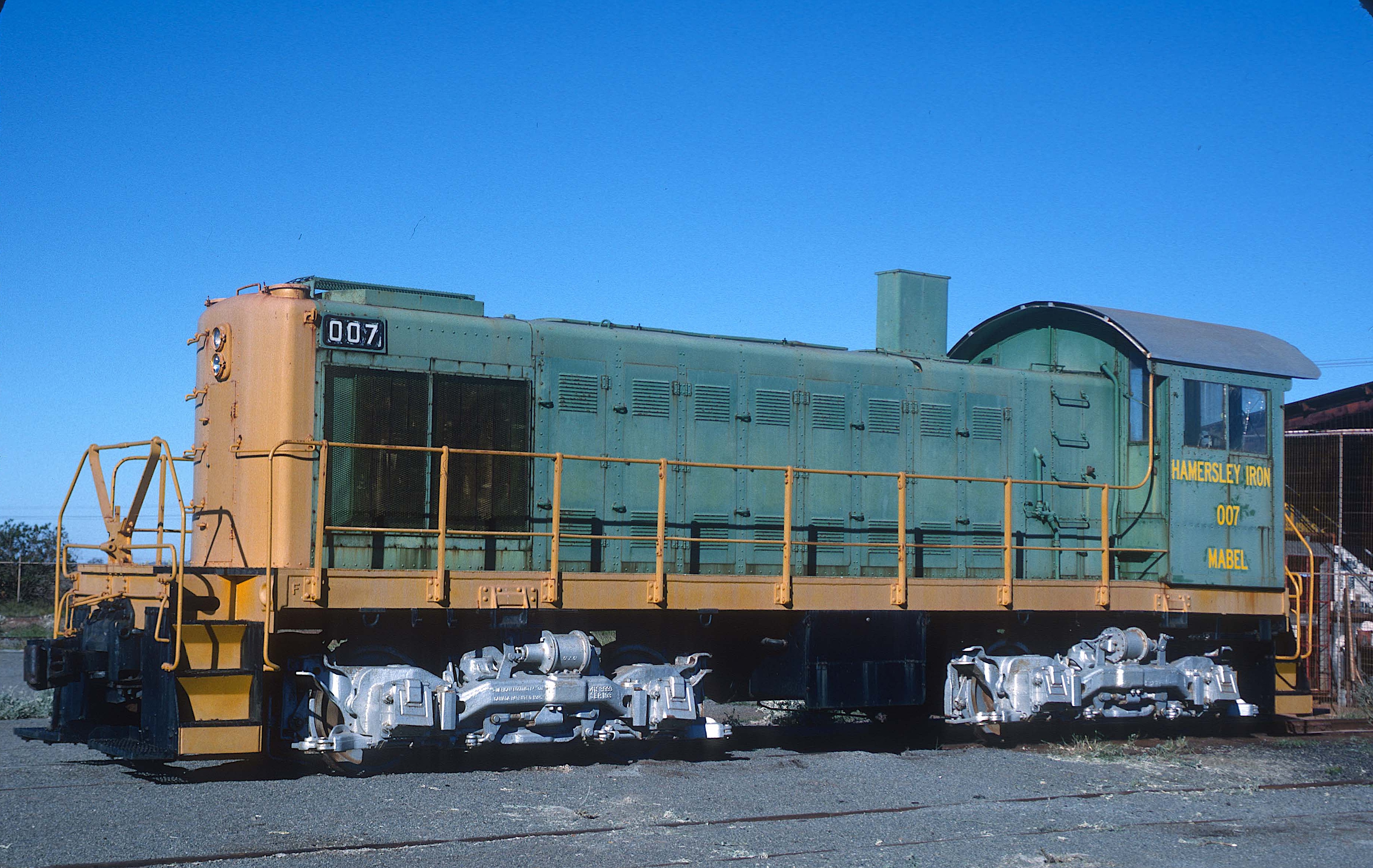
Interestingly, 14 additional years passed before another Alco/MLW-built locomotive appeared. It
was a 1940-vintage S2 built by Alco for the Spokane Portland & Seattle railroad as #21. While on
the Hamersley Iron, it originally carrie #004; it became #007 in 1966. Dubbed "Mabel," the S2
often handled construction trains; its retirement came in 1972. Four years later, the Alco
switcher was placed on display at the Pilbara Historical Society at Six Mile Point. More recent
photos than those presented here suggest the vintage Alco would be a candidate for restoration. |
|
 |  |
Second Generation:
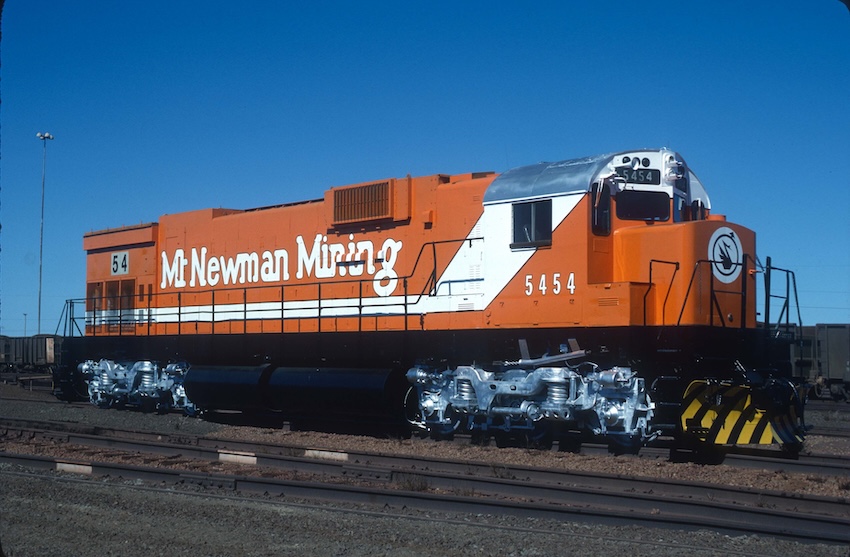
During the latter half of the 1960s, Australia experienced a significant influx of new Alco-built
"Century" series locomotives. It began in May 1965 with Hamersley Iron's purchase of five Alco
2750-horsepower, six-axle road-switchers. Built at the Schenectady plant, they were delivered
in two groups. The first three (#2000-2002) arrived in October thru November of that same year;
the #2000 was later renumbered as 2003. The remaining two Hamersley units (#2004 & 2005) arrived
during 1967. The six-motor C628s were the country's first high-horsepower freight locomotives.
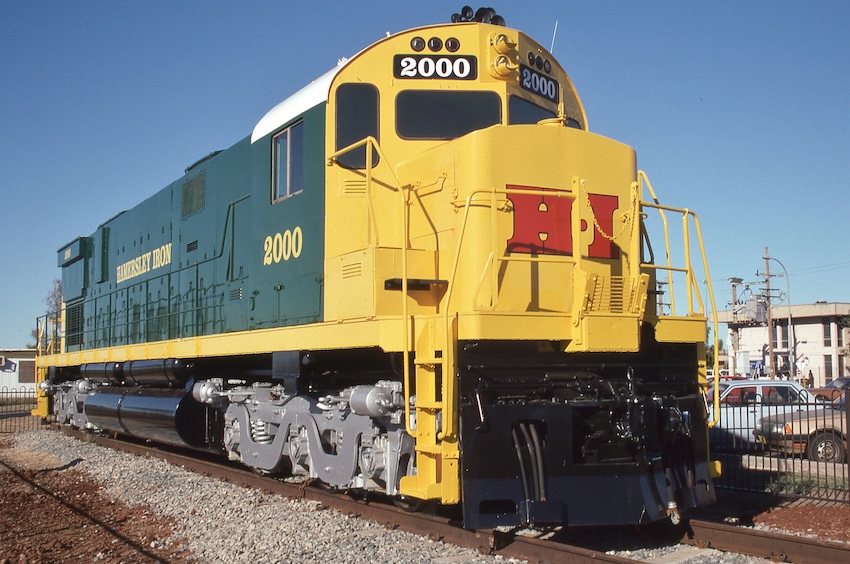
Meanwhile, industry watched intently as the Alco C628s with the 251 prime mover successfully proved their metle in western Australia's rugged iron ore service. Under license to Alco, A.E. Godwin in 1968 took on the next wave of high horsepower locomotive production. The initial order went Mt Newman Mining, and it included thirty-three new 3600-hp six-axle iron ore hauling centuries for Mt Newman Mining (#5452-5484). The last of the Godwin-built Alcos entered service in April 1972. (The 33 A.E. Godwins, along with 21 additional Commonwealth Engineering M636s will be detailed in a future segment.) Until Hammersley Iron Alco's retirement in 1982, the five C628s spent entire career hauling heavy iron ore trains from the inland mines of the rugged Pilbara region to waiting ships at the export docks in Dampier. The only 2750-hp Alco preserved was #2000 which was cosmetically restored and and placed on display at the Seven Mile Depot |
|
 |  |
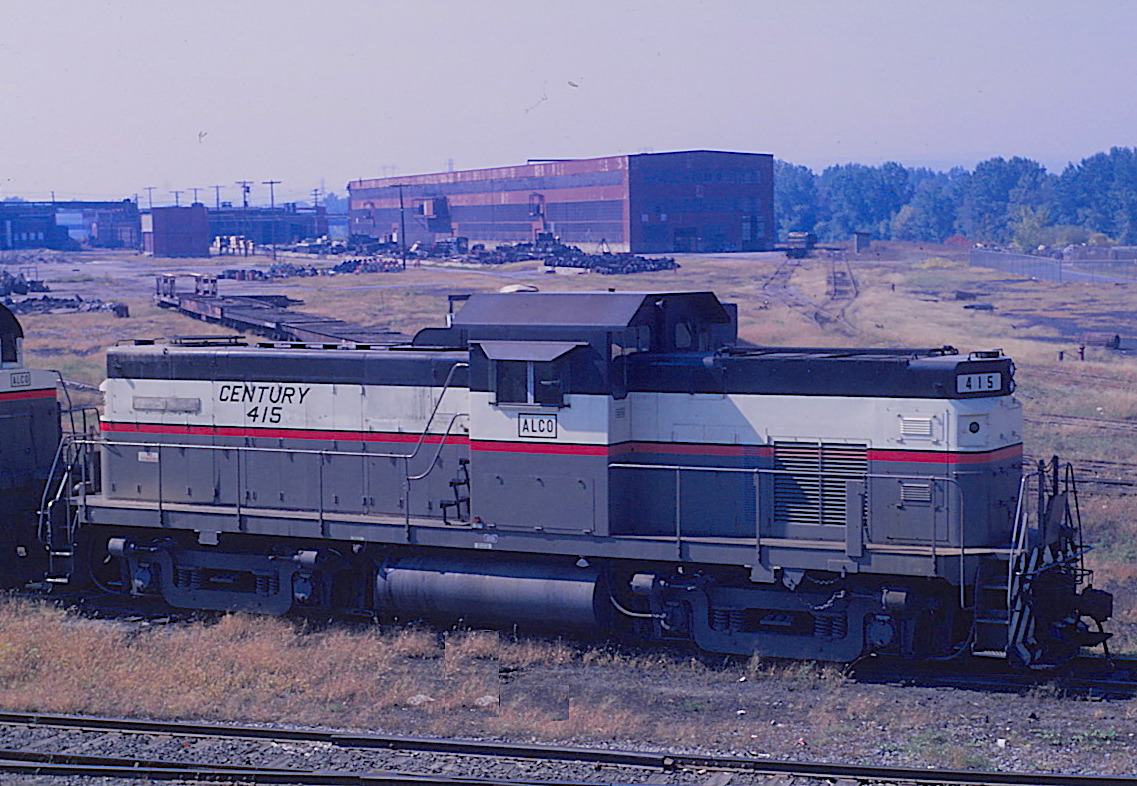
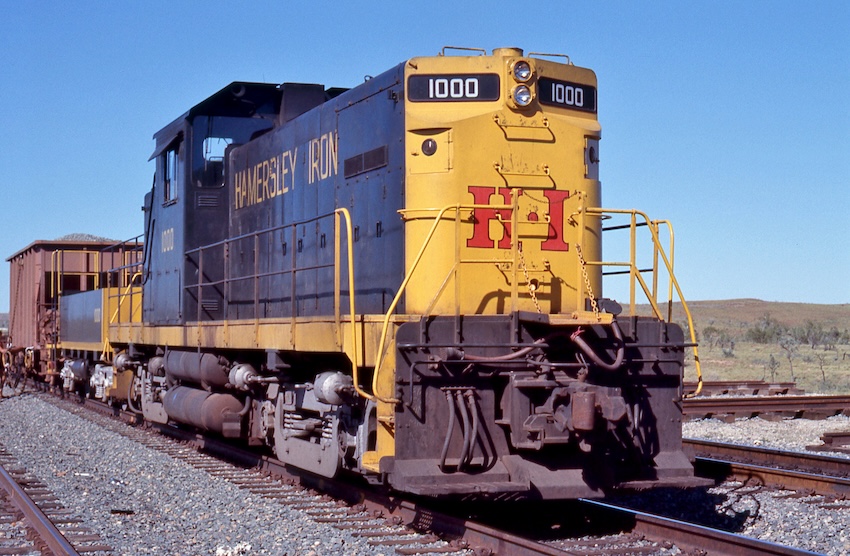
In May 1968, Hammmersley Iron purchased from Alco the lone C415 Demonstrator #415. Initially,
the four-axle yard switcher and work train unit sported the number #008; it was re-numbered
1000 in 1972 and #2000 two decades later. The 1500-horsepower loco featured a standard-height
cab and AAR-Type B trucks. Similarly to its older cousin #007, the C415 became an exhibit
at the Pilbara Historical Society in 1982. |
|
 |  |
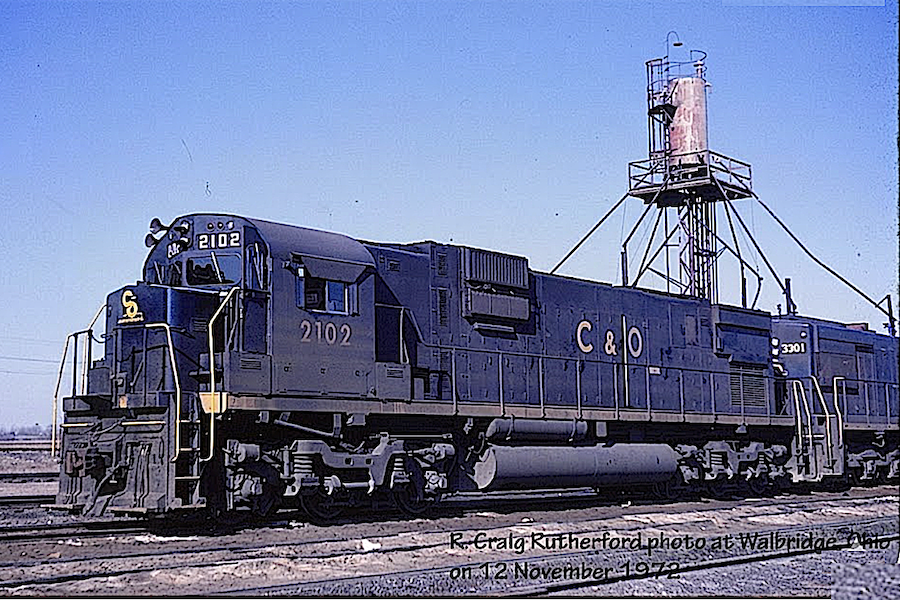
For the second time in ten years, an Australian railroad turned to the used locomotive market
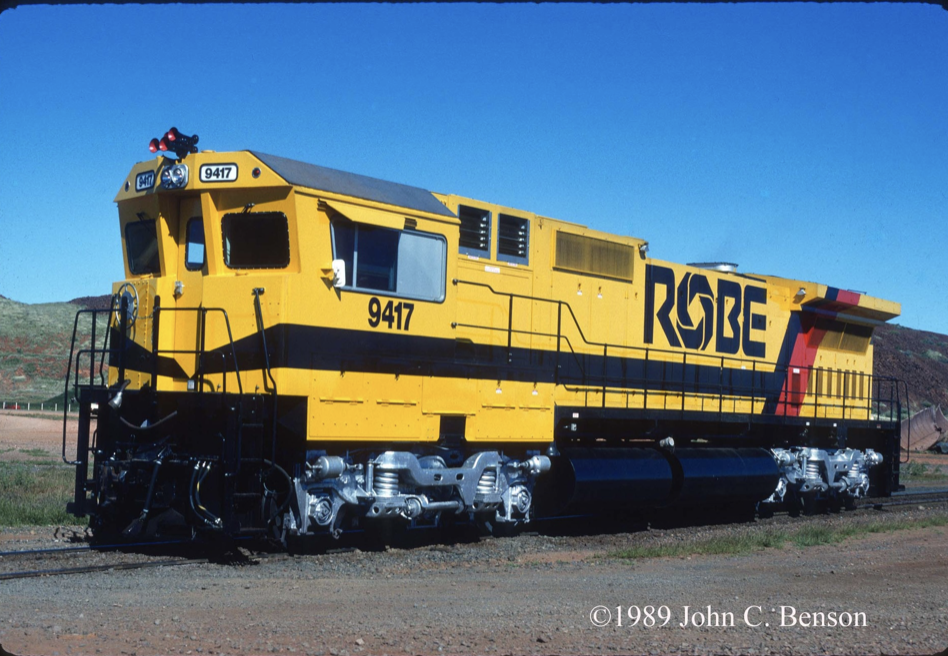
for "new" power. It was 1975 and Robe River Iron purchased four Alco-built 3000-hp freight units
that had previously toiled for the Chesapeake & Ohio (#2100-2103), mostly in Michigan and Ohio.
The C&O cast-offs became Robe River #9417-9420 respectively.
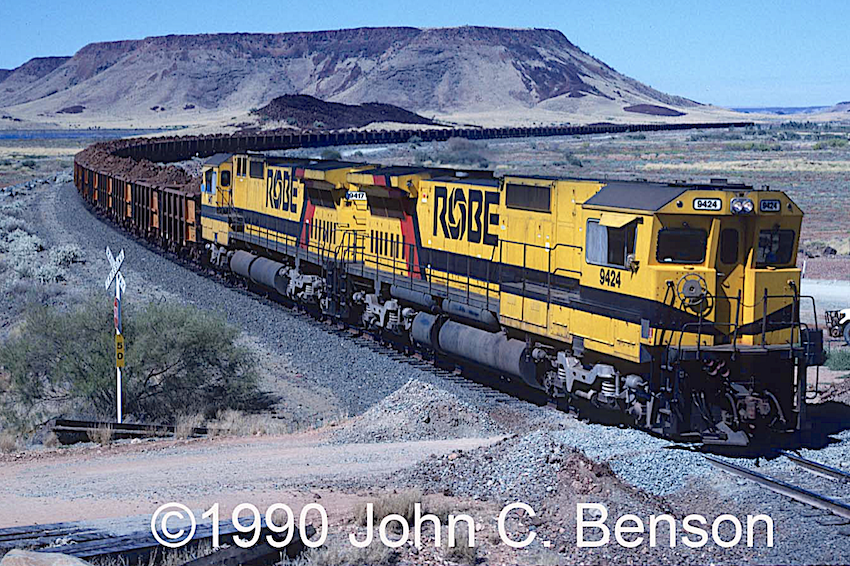
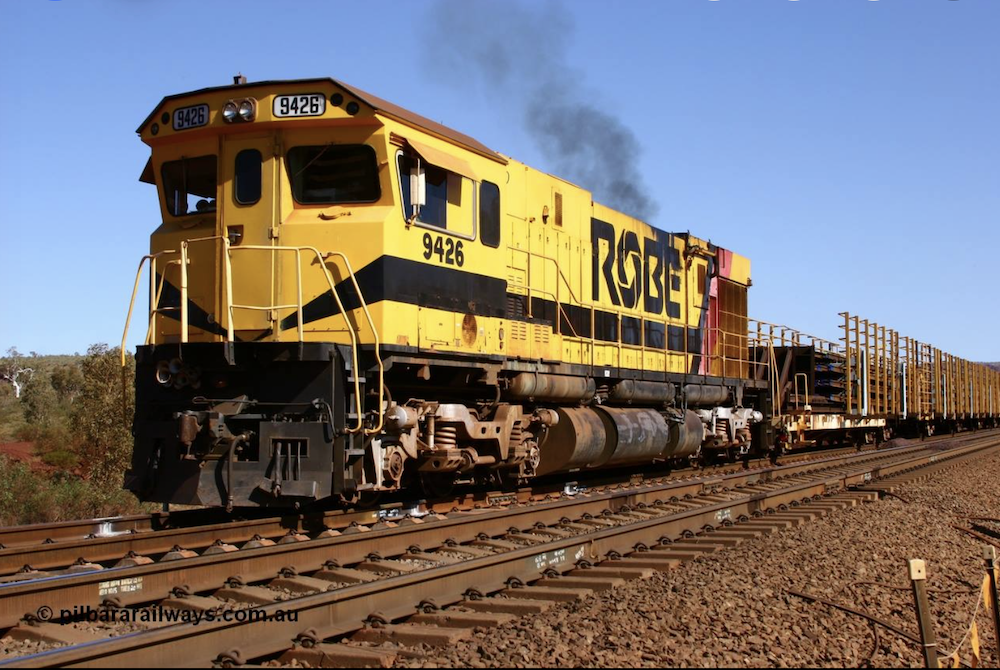
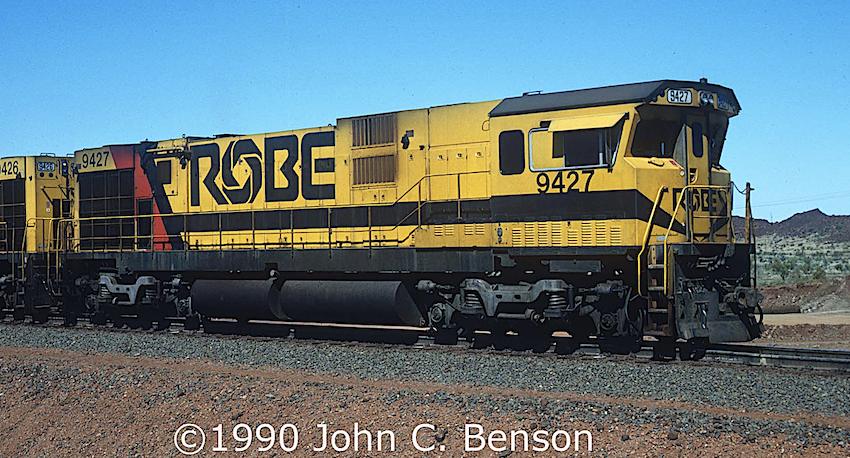
Ex-C&O #2100's time on Robe was shortened when destroyed four years later in an accident. The other three C630s #9418-9420 were rebuilt as CM40-8Ms by Goninan & Co., an Australian locomotive builder. The rebuild work took place December 1990 (#9418), October 1990 (#9419) and March 1991 (#9420). The six-motor Alco trio were sidelined around 2020, and officially retired in 2022. |
|
 | 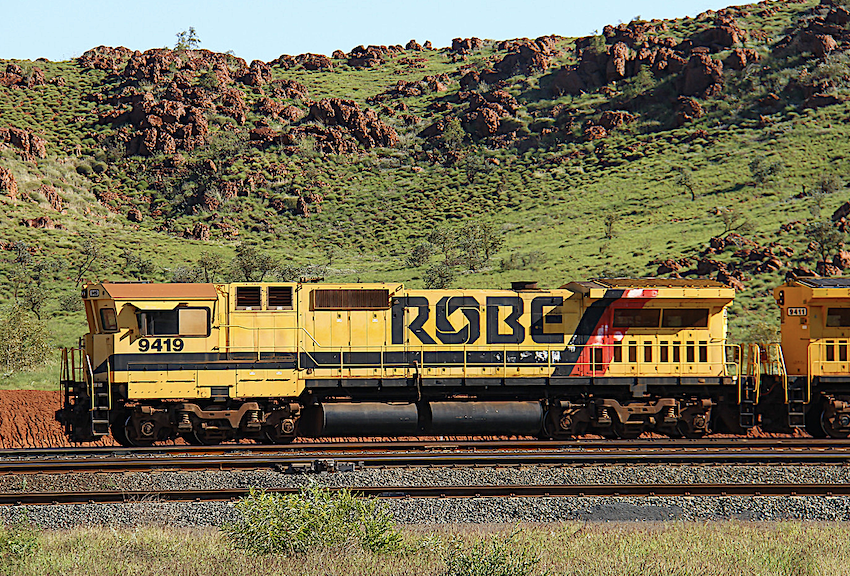 |
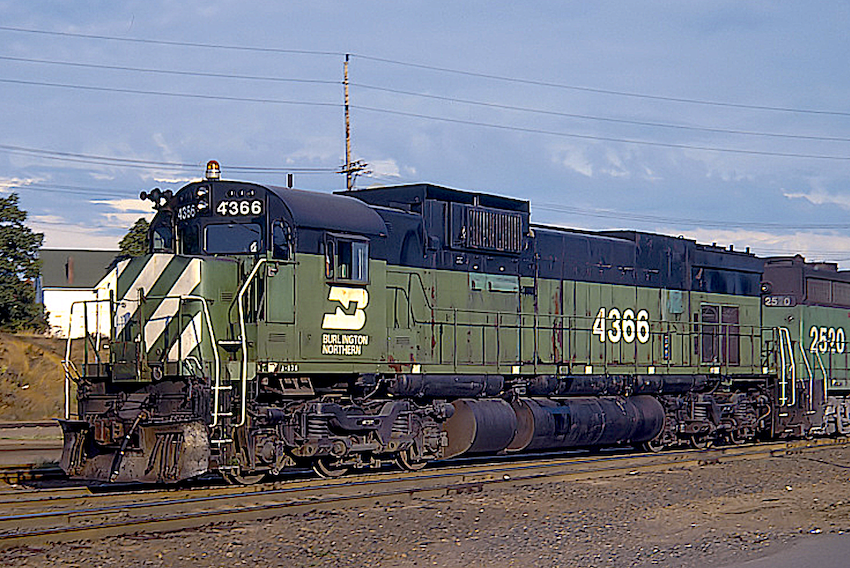
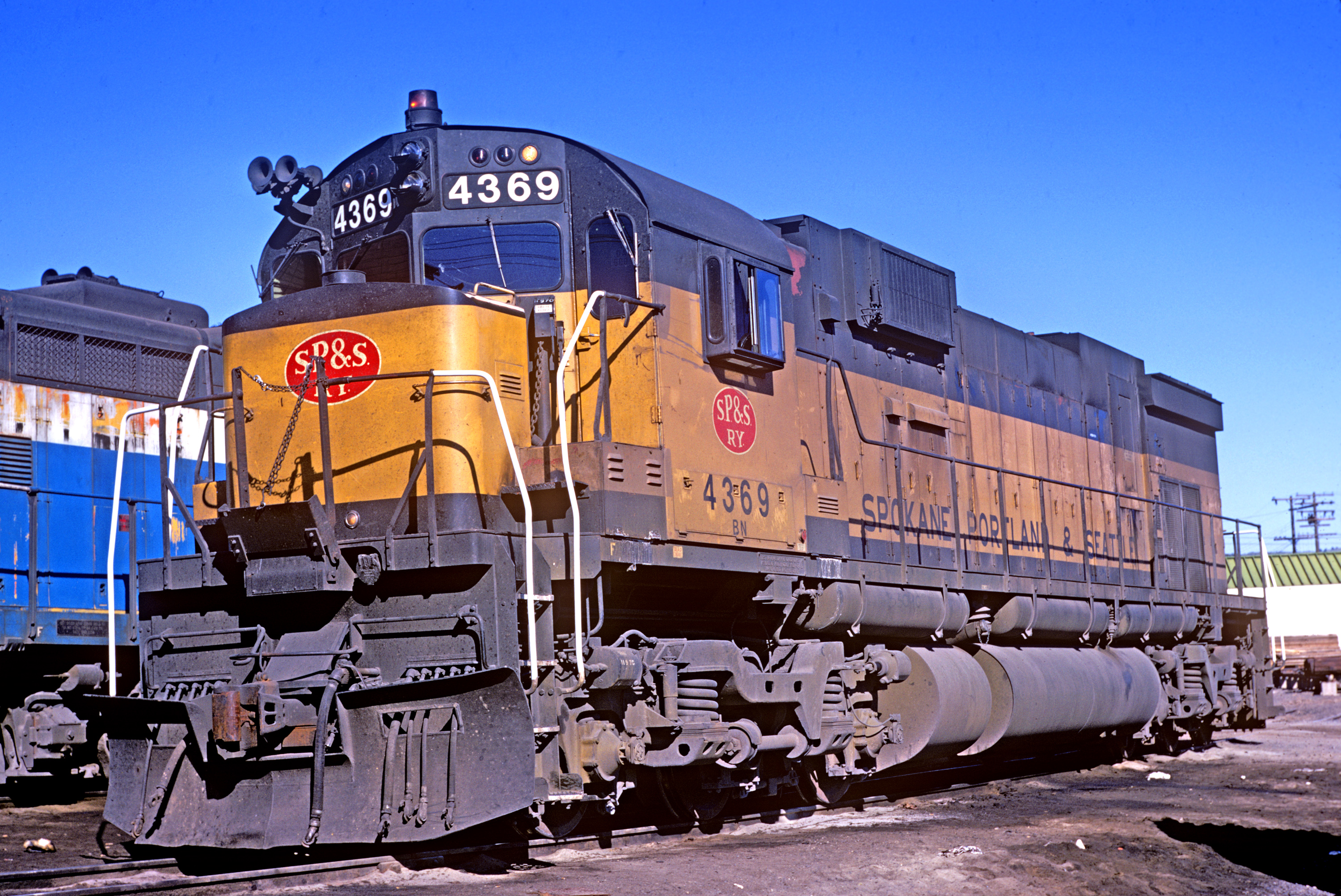
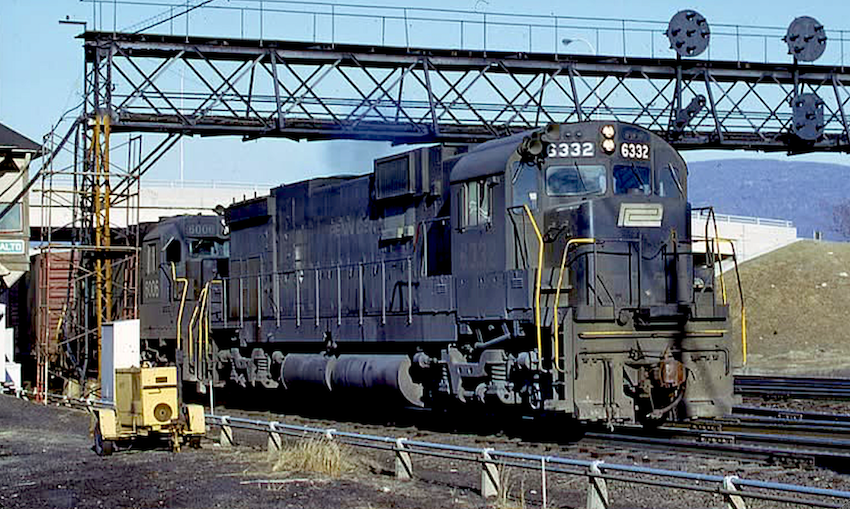
During the 1980s, Robe River dipped into the used locomotive market on four separate occasions;
each time retrieving a 3600-hp road unit from either the Burlington Northern or Conrail stables.
All four of the six-motor centuries were later cycled through the Goninan & Co's. upgrade program
and exited as CM40-8Ms. The roster additions included:
| |
 |  |
 |  |
 |  |
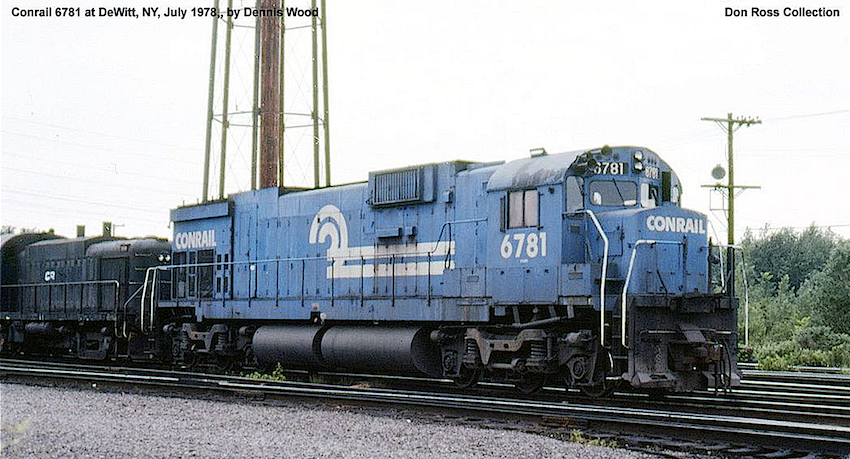 |  |
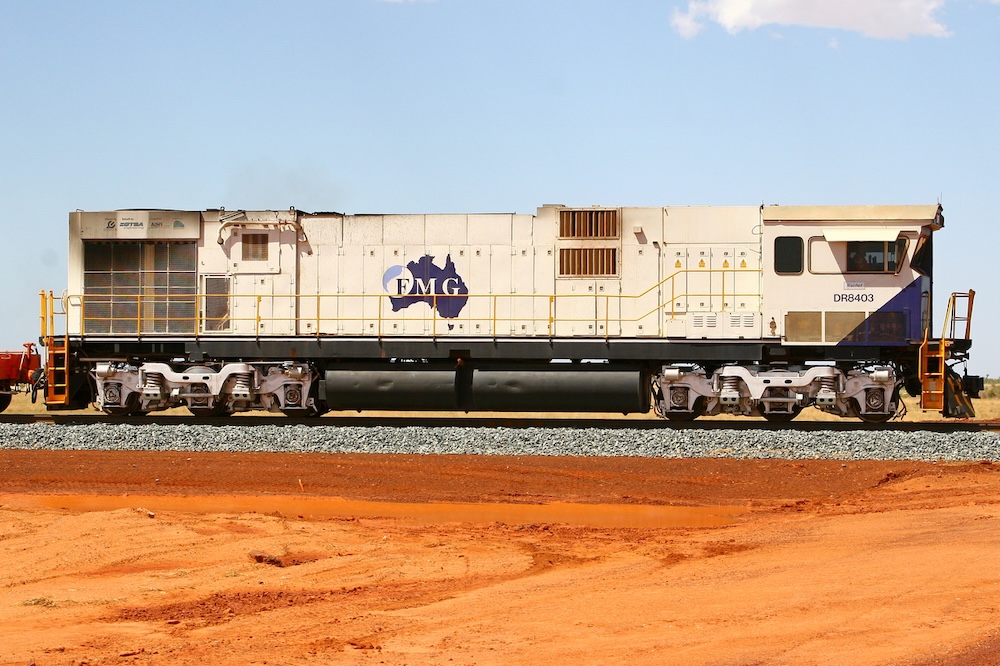
The two ex-Conrail locos which had retained their 16-261 prime mover were rebuilt
as C636Rs and later stored in 2001. The pair were returned to service during 2007 and 2008
to assist in the construction of Fortescue Metals Group's new 170-mile rail segment in western
Australia. Re-numbered FMG DR8401 (ex-Conrail 6732) and DR8403 (ex-Conrail 6731), they were
the last Century units in service on the Austalia continent. |
 |
|
blank This article would not have been possible without the help of the following contributors:
|
|
| New: 1 July 2026 by R. Craig | |